
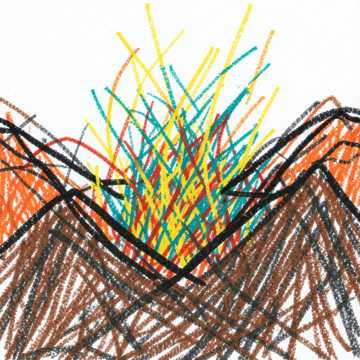
v2.0 (VAI) Gehinom
歌詞
Gehinom—often rendered in English as Gehenna—is one of the Jewish tradition’s most misunderstood ideas. It is frequently translated as “hell,” but that translation can be misleading. In much of Jewish thought, Gehinom is not primarily a place of everlasting torture. It is better understood as a condition or realm of judgment, exposure, purification, and moral reckoning after death. The name comes from Gei Hinnom, the Valley of Hinnom near Jerusalem, a place associated in the Hebrew Bible with idolatrous practices and acts regarded as profoundly evil. Because of those associations, the valley eventually became a powerful image for divine judgment. Later Jewish literature developed the image further, but not always in one uniform way. Judaism contains multiple descriptions and interpretations of what happens after death, and there is no single universally binding map of the afterlife. A common rabbinic conception holds that most souls who enter Gehinom do not remain there forever. One frequently cited tradition limits the ordinary period to twelve months. Gehinom, therefore, can be understood less as an eternal prison than as a severe encounter with truth. A person confronts what he has done, what he has become, what damage he has caused, and perhaps also what he failed to become. That distinction matters. Punishment alone can be imagined as something merely inflicted from outside. Purification suggests something more profound: falsehood can no longer be maintained. Excuses disappear. Self-deception fails. The soul encounters reality without the protections and evasions available during earthly life. In that sense, the “fire” of Gehinom need not be reduced to ordinary physical flame. Jewish texts and later teachers have used the imagery of fire because fire burns, separates, exposes, and purifies. The image communicates the severity of moral truth. What cannot remain must be burned away. Yet Gehinom is not therefore trivial or comfortable. The fact that it may be temporary does not make it insignificant. A genuine confrontation with one’s actions, without distraction or rationalization, may itself be terrible. Mercy does not abolish judgment, and judgment does not necessarily abolish mercy. This is one of the important differences between Gehinom and the popular image of an eternal inferno ruled by the Devil. In Jewish thought, Satan is not an independent rival deity governing a kingdom opposed to God. Gehinom remains under divine authority. Judgment belongs to God. Its purpose, in many Jewish interpretations, is therefore not simply destruction. It is correction. Purification. Reckoning. A soul is brought face to face with truth. And that makes Gehinom a deeply moral idea: what we do matters. The shape we give our lives matters. We cannot assume that death makes truth irrelevant. But neither must judgment mean that hope has ended.
AIでボイスオーバーと楽曲を生成
Voices AI をダウンロード
ライブラリ内の300以上のさまざまな声でオーディオを作成できます。


おすすめの楽曲
AI生成楽曲ライブラリで音楽の未来を発見
AIソングライブラリへようこそ。革新的な人工知能と創造的表現が出会う次世代の音楽制作です。ジャンル、ムード、言語を超えたユーザー生成のAI楽曲を豊富に探索できます。アンビエントやシネマティックなサウンドスケープから、アップビートなポップや深く共鳴するトラックまで、AI駆動の技術がユニークで高品質な音楽を生み出し、あらゆるプロジェクトや個人の楽しみにも最適です。
コンテンツクリエイター、ゲーム開発者、ポッドキャスター、または単に音楽好きの方でも、AI駆動の楽曲ライブラリはすべての人に何かを提供します。各トラックは高度なAI技術で作られ、リアルな音質と自然な感触を実現し、独自のニーズに合わせたカスタマイズが可能です。バックグラウンドスコアからインスピレーションあふれるサウンドトラックまで、プラットフォーム上でAI音楽の多様性と深みを発見してください。
AIソングライブラリの主な機能:
- 豊富なジャンル選択: ポップ、ロック、ヒップホップ、クラシック、ジャズ、アンビエントなど、さまざまな音楽スタイルの楽曲を発見できます。すべて高度なAI技術で生成されています。
- ムードとトーンのカスタマイズ: アップビート、チル、ドラマチック、インスピレーショナルなど、必要なムードに合うトラックを簡単に見つけたり作成したりできます。AI音楽が最適な雰囲気を提供します。
- 多言語歌詞: ライブラリには英語、ドイツ語、スペイン語など、複数の言語の楽曲が含まれており、リーチを拡大しグローバルなオーディエンスとつながります。
- マルチメディアに最適: 背景音楽、効果音、またはビデオ、ポッドキャスト、プレゼンテーションへのユニークな追加としてAI楽曲ジェネレーターを活用できます。
なぜ当社のAI生成楽曲を選ぶのか?
- 高品質サウンド: 多言語対応により、世界中のリスナーとつながり、異文化プロジェクトに最適です。
- 無限の創造性: AI駆動のカスタマイズにより、各楽曲はプロジェクトのニーズに合わせて独自に調整でき、クリエイターにとって価値ある資産となります。
- グローバルなアクセシビリティ: 多言語対応により、世界中のリスナーとつながり、異文化プロジェクトに最適です。
- 簡単な統合: 音楽制作、ストリーミング、ソーシャルメディア、商用利用など、既存のワークフローに楽曲を手間なくダウンロード・統合できます。
今すぐAIソングライブラリを閲覧し、最先端AI技術で作られたユーザー生成音楽を探検しましょう。コンテンツに最適なサウンドトラックを見つけ、革新的なサウンドスケープでプロジェクトを高め、音楽制作の未来を体験してください。