
v2.0 (VAI) Gehinom
Lyrics
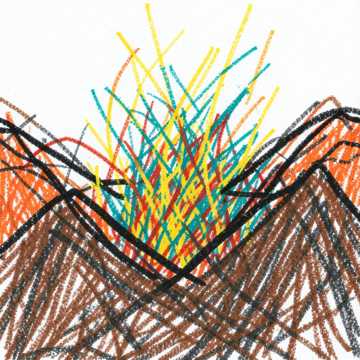
Gehinom—often rendered in English as Gehenna—is one of the Jewish tradition’s most misunderstood ideas. It is frequently translated as “hell,” but that translation can be misleading. In much of Jewish thought, Gehinom is not primarily a place of everlasting torture. It is better understood as a condition or realm of judgment, exposure, purification, and moral reckoning after death. The name comes from Gei Hinnom, the Valley of Hinnom near Jerusalem, a place associated in the Hebrew Bible with idolatrous practices and acts regarded as profoundly evil. Because of those associations, the valley eventually became a powerful image for divine judgment. Later Jewish literature developed the image further, but not always in one uniform way. Judaism contains multiple descriptions and interpretations of what happens after death, and there is no single universally binding map of the afterlife. A common rabbinic conception holds that most souls who enter Gehinom do not remain there forever. One frequently cited tradition limits the ordinary period to twelve months. Gehinom, therefore, can be understood less as an eternal prison than as a severe encounter with truth. A person confronts what he has done, what he has become, what damage he has caused, and perhaps also what he failed to become. That distinction matters. Punishment alone can be imagined as something merely inflicted from outside. Purification suggests something more profound: falsehood can no longer be maintained. Excuses disappear. Self-deception fails. The soul encounters reality without the protections and evasions available during earthly life. In that sense, the “fire” of Gehinom need not be reduced to ordinary physical flame. Jewish texts and later teachers have used the imagery of fire because fire burns, separates, exposes, and purifies. The image communicates the severity of moral truth. What cannot remain must be burned away. Yet Gehinom is not therefore trivial or comfortable. The fact that it may be temporary does not make it insignificant. A genuine confrontation with one’s actions, without distraction or rationalization, may itself be terrible. Mercy does not abolish judgment, and judgment does not necessarily abolish mercy. This is one of the important differences between Gehinom and the popular image of an eternal inferno ruled by the Devil. In Jewish thought, Satan is not an independent rival deity governing a kingdom opposed to God. Gehinom remains under divine authority. Judgment belongs to God. Its purpose, in many Jewish interpretations, is therefore not simply destruction. It is correction. Purification. Reckoning. A soul is brought face to face with truth. And that makes Gehinom a deeply moral idea: what we do matters. The shape we give our lives matters. We cannot assume that death makes truth irrelevant. But neither must judgment mean that hope has ended.
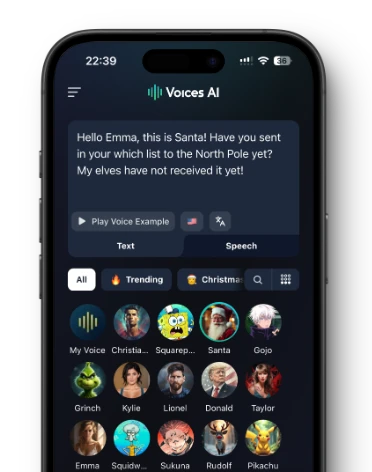
Generate Voiceovers & songs with AI
Download Voices AI
Create audio with more than 300 different voices in our library.
Recommended Songs
Discover the Future of Music with Our AI-Generated Songs Library
Welcome to the next generation of music creation with our AI Songs Library, where innovative artificial intelligence meets creative expression. Explore a vast selection of user-generated AI songs across genres, moods, and languages. From ambient and cinematic soundscapes to upbeat pop and deep, resonant tracks, our AI-driven technology brings unique, high-quality music to life, perfect for any project or personal enjoyment.
Whether you're a content creator, game developer, podcaster, or simply a music lover, our AI-powered song library offers something for everyone. Each track is crafted using advanced AI technology, ensuring realistic sound quality and a natural feel, with customizable options to suit your unique needs. From background scores to inspirational soundtracks, discover the versatility and depth of AI music on our platform.
Key Features of Our AI Songs Library:
- Wide Genre Selection: Discover songs across various music styles like pop, rock, hip-hop, classical, jazz, ambient, and more, all generated by advanced AI technology.
- Mood and Tone Customization: Easily find or create tracks that match the mood you need-whether it’s upbeat, chill, dramatic, or inspirational, our AI music offer the perfect vibe.
- Multi-Language Lyrics: Our library includes songs in multiple languages, including English, German, Spanish, and many others, expanding your reach and connecting with global audiences.
- Perfect for Multimedia: Use our AI song generator for background music, sound effects, or as a unique addition to your videos, podcasts, and presentations.
Why Choose Our AI-Generated Songs?
- High-Quality Sound: Our multi-language support means your music can engage listeners from around the world, making it perfect for cross-cultural projects.
- Endless Creativity: With AI-driven customization, each song can be uniquely tailored to fit your project’s needs, making it a valuable asset for creators.
- Global Accessibility: Our multi-language support means your music can engage listeners from around the world, making it perfect for cross-cultural projects.
- Easy Integration: Download and integrate songs effortlessly into your existing workflows, whether it’s for audio production, streaming, social media, or commercial use.
Browse our AI Songs Library now to explore user-generated music, crafted with cutting-edge AI technology. Find the perfect soundtrack for your content, elevate your projects with innovative soundscapes, and experience the future of music creation today.