How to Do a Narrator Voice: Tips for Voiceovers, Audiobooks, and Videos

Anna
·October 13, 2026
A good narrator voice is not about having a deep, booming voice. It is about being easy to listen to: clear, steady, warm, and paced so the listener never has to work to follow you. Those are skills anyone can practice.
This guide covers the techniques narrators use, how to record a clean voiceover at home, and how to make AI narration when you would rather not record yourself.
What makes a good narrator voice?
- Clarity: every word is easy to understand, including names and numbers.
- Pace: slower than everyday conversation, with room to breathe.
- Warmth: the voice sounds like it is talking to one person, not reading at a crowd.
- Consistency: the same energy and tone from the first sentence to the last.
- Purposeful pauses: silence that gives important points time to land.
Narrator voice techniques
Slow down
Most people read too fast when they record. Aim for a pace slightly slower than you think you need. It will sound natural to listeners and gives you room for emphasis.
Mark up your script
Before you record, underline the words that carry the meaning of each sentence and add a slash where you want a pause. Narration sounds natural when you stress a few key words, not every word.
Breathe between ideas
Take small breaths at natural breaks such as commas and full stops, not in the middle of a phrase. Supported breathing from your belly keeps your voice steady over long passages.
Smile, slightly
A slight smile brightens your voice and makes it sound friendlier, even though nobody can see you. For serious documentary content, relax the smile but keep the warmth.
Talk to one person
Imagine one specific listener sitting across from you. Narration that feels like a conversation keeps people listening far longer than narration that sounds like reading.
Vary your delivery a little
A flat delivery loses listeners. Let your pitch move naturally, slow down for important points, and lift your energy slightly at the start of a new section.
Narrator styles
- Documentary: calm, measured, and authoritative, with longer pauses.
- Storytelling and audiobooks: warmer and more expressive, with clear changes of pace for tension and release.
- Explainer and YouTube: friendly and conversational, a little faster, with a clear structure.
- Movie trailer: low, slow, and dramatic, with long pauses before big lines. Fun to try, but tiring over long scripts.
Record a clean voiceover at home
- Choose the quietest, softest room you have. A closet full of clothes is a classic home booth because fabric absorbs echo.
- Keep a steady distance from the mic. About a hand-width works for most microphones, including phones.
- Record a few seconds of silence at the start so you can hear any background noise.
- Do several takes of difficult lines and keep the best one.
- Clean up noise afterwards. If your recording has background hum, traffic, or room noise, an AI audio enhancer removes it.
Make AI narration instead
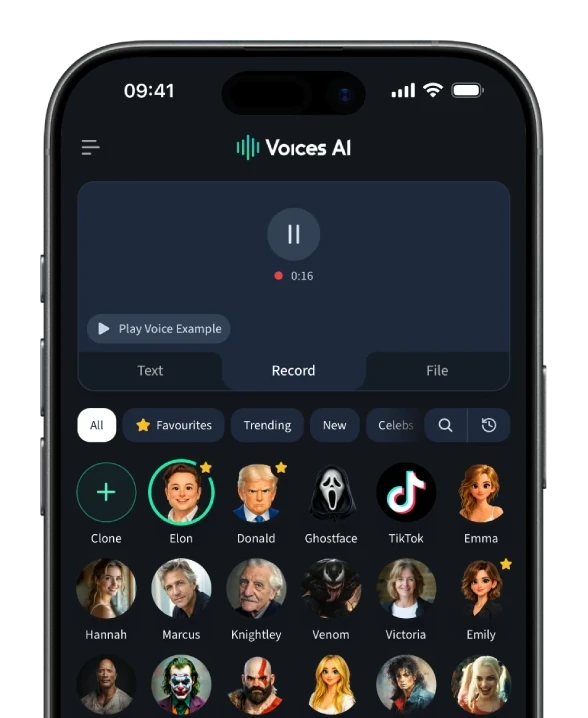
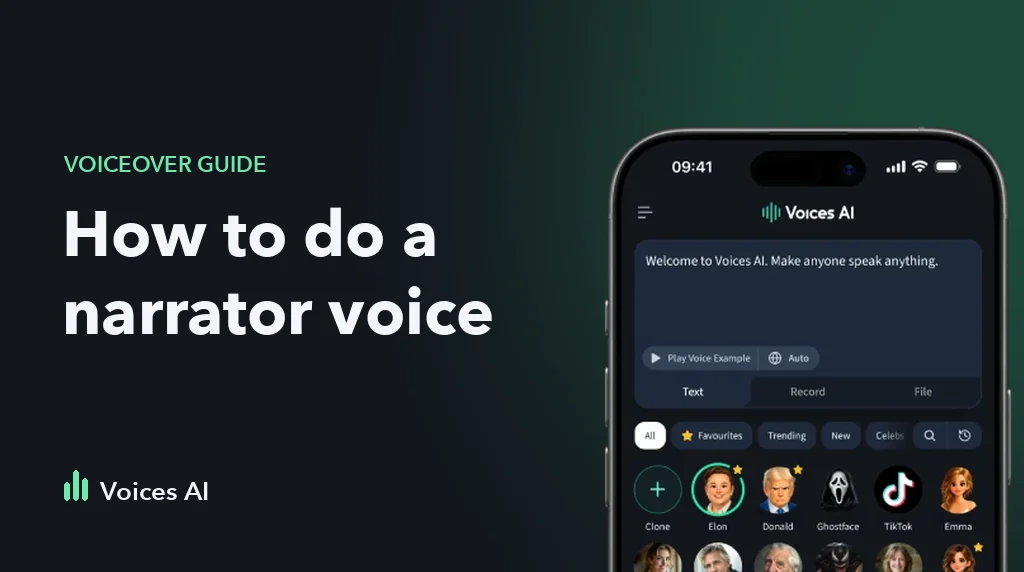
If you do not want to record yourself, or you need narration in another language, text to speech is the faster route. With the Voices AI narrator voice generator on iPhone and Android, you paste your script, pick a narrator voice, and download the voiceover.
The same techniques still apply. Write for the ear with short sentences, use punctuation to control pauses, and spell tricky names the way they should be pronounced. For long scripts, generate the narration in sections so you can fix one line without redoing everything.
You can also clone your own voice from a short recording and let it read your scripts, which keeps your channel's voice consistent without recording every video.
FAQ
How do I make my voice sound like a narrator?
Slow down, mark the key words and pauses in your script, breathe at natural breaks, and imagine you are talking to one person. A slight smile and steady energy make your voice warmer and easier to listen to.
What is the best voice for narration?
The best narrator voice is the one that fits your content: calm and steady for documentaries, warm and expressive for stories, friendly and upbeat for explainers. Try your script in two or three voices and listen to them back to back.
Can I use AI narration on YouTube?
Many creators use AI narration on YouTube. Check YouTube's current policies on AI-generated content and disclosure before you publish.
How do I do a movie trailer voice?
Speak low and slow, pause before key phrases, and let each line land with weight. Short sentences work best, such as "In a world... where nothing is what it seems."
How do I make narration without recording my voice?
Use text to speech. Paste your script into a narrator voice generator, choose a voice, and download the audio for your video.
About the Author
Anna